|
|
The Diaries and Letters
|
|
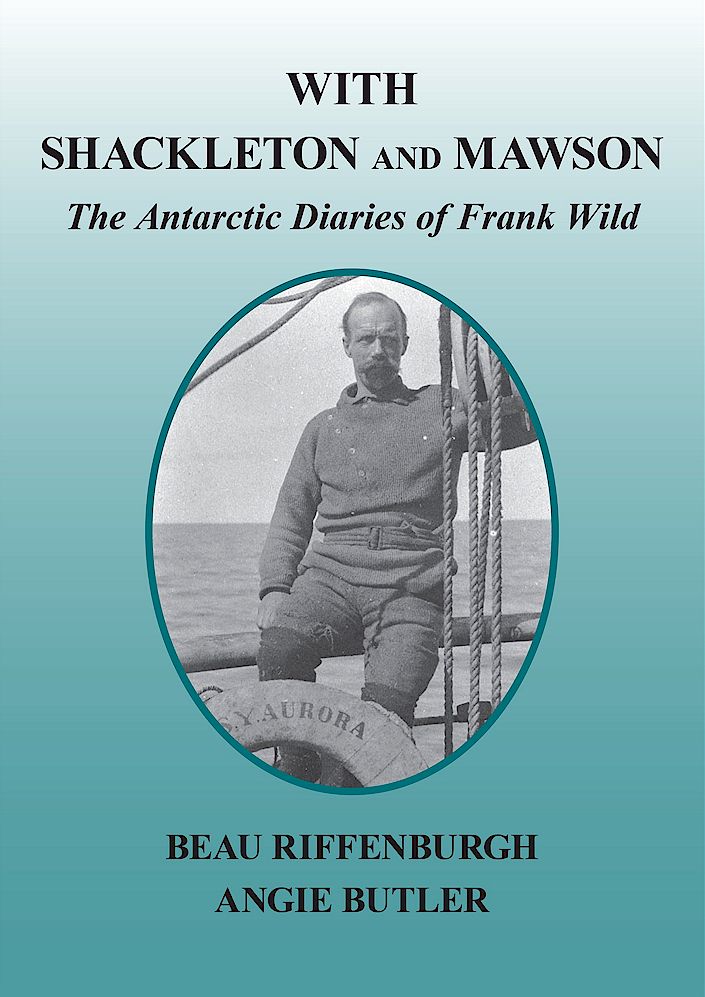
WITH SHACKLETON and
MAWSON. The Antarctic Diaries of Frank Wild - Beau
Riffenburg & Angie Butler
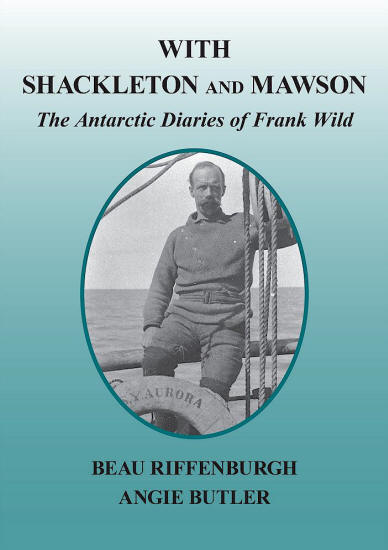
Frank Wild is a name
well known to anyone interested in the history of Polar
exploration. He was one of only two men — along with
Ernest Joyce— to earn the Polar Medal with four clasps.
He was also the only man to serve in the Antarctic under
the British Empire’s three greats—Scott, Shackleton and
Mawson. This book, however, is not a biography, but
rather a chance to view Wild’s role and accomplishments
from his own writings — his diary kept during the
Southern Journey of Shackleton’s BAE, his sledging diary
from Mawson’s expedition, and his report to Mawson about
the operations of the AAE’s Western Base, which he
commanded in 1912—13. These have been quoted in other
works, but they have never been published before in
their entirety.
It is thought that Wild did keep other diaries, but
these have not come to light.
The two diaries
included here are the only two diaries of Wild known
with certainty to be extant.
Hardback, jacketed, 276pp, over 100 photographs and
illustrations, 2 fold-out maps. £35.00
Order
|
|
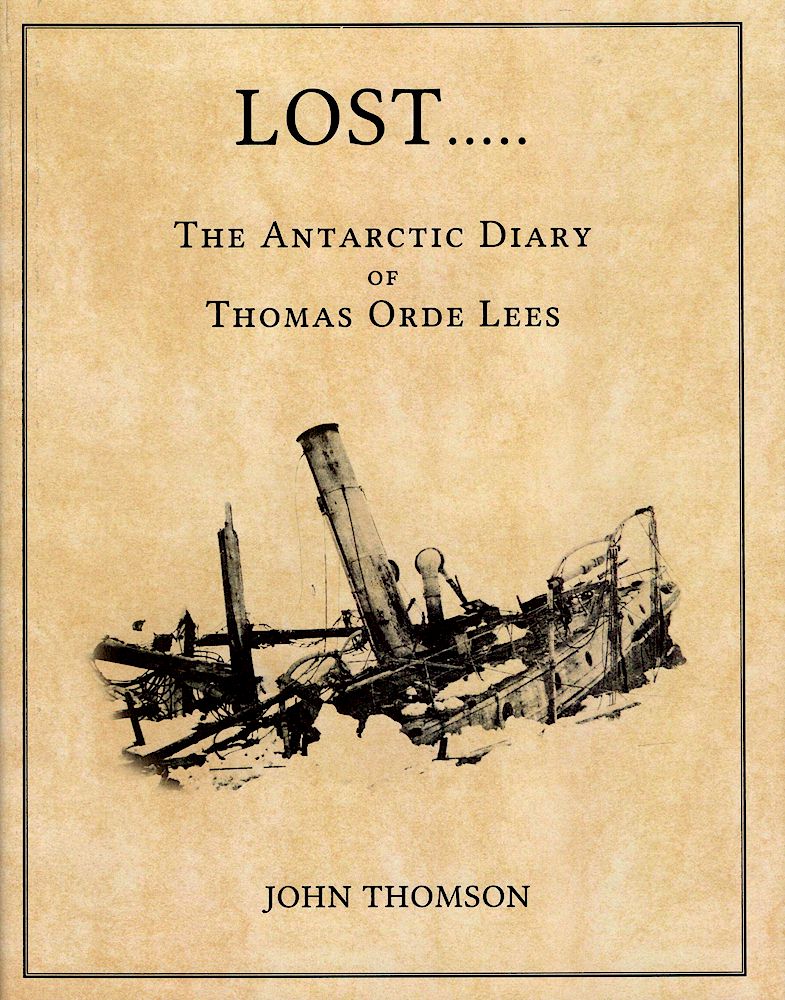
LOST… THE
ANTARCTIC DIARY OF THOMAS ORDE LEES – John Thomson
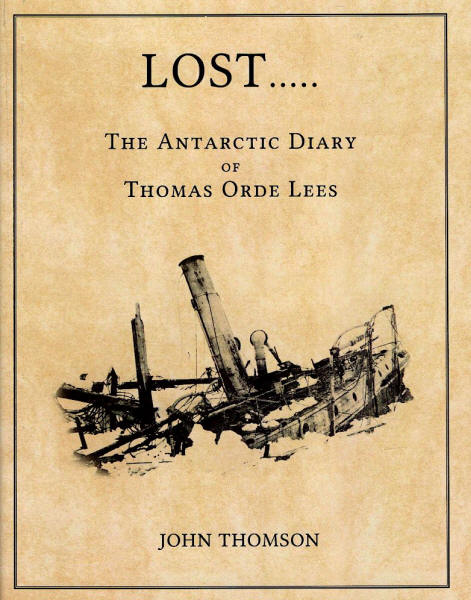
The story
of Shackleton and his Endurance adventure is very well
known in the canon of Antarctic literature. His attempt
to cross the Antarctic continent failed spectacularly.
When the ship was crushed, he and his crew made their
way to the desolation of Elephant Island. From there,
Shackleton, Frank Worsley, Tom Crean, Harry McNeish, John
Vincent and Timothy McCarthy made that epic voyage to
South Georgia in the James Caird to ultimately arrange
the rescue the crew.
Orde Lees was selected originally as the motor expert
but when this became redundant Lees became the storeman,
and thus was responsible for maintaining and
distributing supplies on the Endurance and on Elephant
Island and naturally in this capacity he was destined to
become an easy target for the bored and hungry. He was
also the only member who maintained a personal daily
diary of the voyage, from Day 1 to the day the rescued
men left South America for England more than two years
later. Lees was often a `man alone' on the ship but was
always capable of appreciating and describing in
touching and sensitive language a beautiful polar dawn
or nature at its most inspiring.
Margaret Scott, in her capacity as manuscript librarian
at the Alexander Turnbull Library, National Library of
New Zealand, has said the diary `has a rare dramatic
quality and an eye and ear for the unusual and
interesting. Perhaps because it is also ingenuous and
different from the official accounts it has its own
intrinsic value’.
508 pp +
16 pp colour and B & W plates
250
COPIES ONLY £45.00
Order
|
|
THE
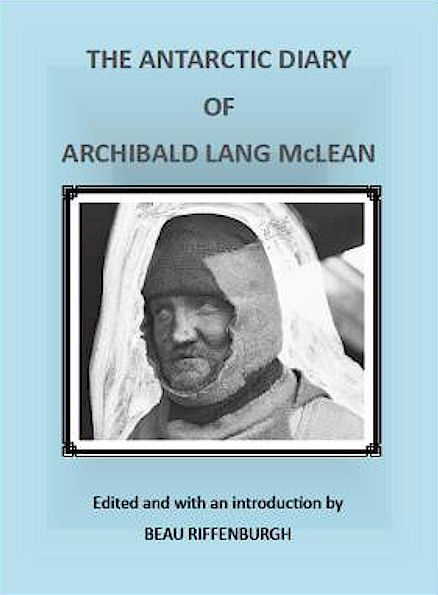
ANTARCTIC DIARY OF ARCHIBALD LANG MCLEAN - Edited
and with an introduction by Beau Riffenburgh
Archibald Lang McLean
was a graduate in Arts and Medicine at Sydney University
who in 1911 applied to join Douglas Mawson’s
Australasian Antarctic Expedition as the expedition’s
doctor and bacteriologist. On the expedition he studied
the effects of the Antarctic environment on other
members of the expedition, taking regular blood samples
and skin swabs.
From the beginning,
McLean distinguished himself by his willingness to
engage in hard manual labour, a trait that showed itself
again on Macquarie Island, during the period when the
base and wireless station were set up. He also carried
out medical tests and examinations. He was the first to
demonstrate that hair and nail growth decrease in the
Antarctic, due to the cold, which causes
vasoconstriction. He also was the first in the Antarctic
to describe his methods of measuring haemoglobin, cell
counts, and blood pressure. In fact, it has been
suggested that through this work he laid the foundations
for modern physiological research in the Antarctic.
When Aurora returned to collect the expedition, Mawson,
Ninnis and Mertz had not come back from their sledging
expedition and McLean volunteered to stay and if
necessary search for Mawson.
On 8 February Aurora
sailed, leaving the small party behind. Within hours of
the ship’s departure, Mawson returned in terrible
physical condition, bearing with him the tragic tale of
the deaths of Ninnis and Mertz. A wireless message was
sent to Davis, asking him to come back to pick up the
remaining men but the weather conditions prevented the
men on shore from reaching the ship, and Davis
eventually made the decision to leave the seven of them
at Cape Denison. Mawson, McLean and the others would
spend another year at their base.
The story of the second
year at Commonwealth Bay was originally told in Mawson’s
The Home of the Blizzard. The published primary
sources about the second wintering have in the past been
the diaries of Mawson and Madigan, two men who often did
not see eye to eye. McLean’s contribution therefore adds
a valuable perspective.
Hardback, jacketed,
404pp, 100 photographs and illustrations and one foldout
colour map. £27.50
Order
|
|
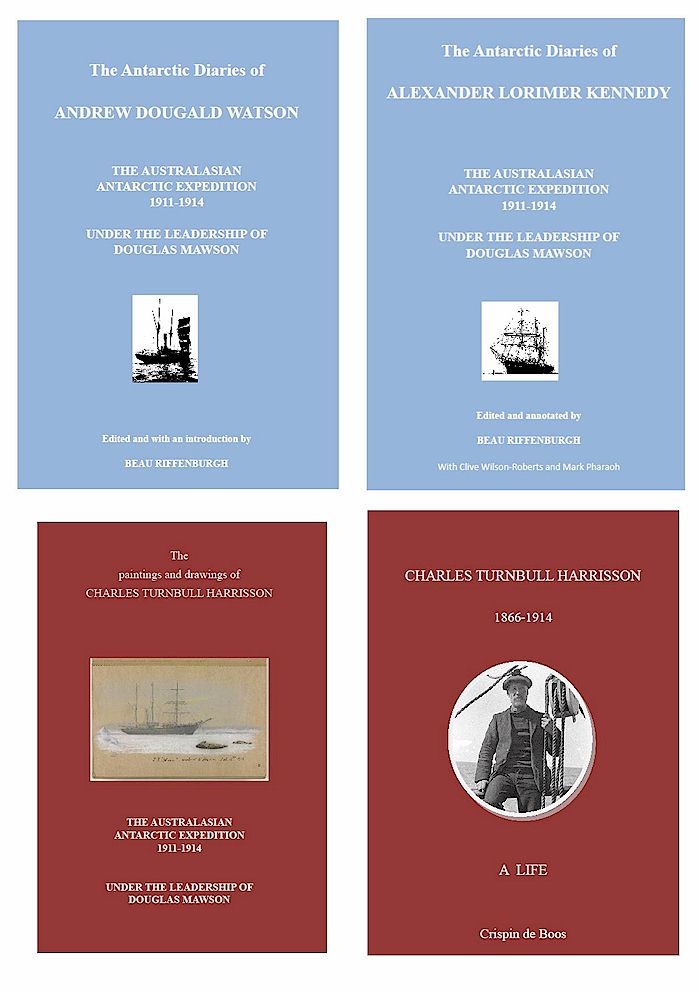
The
Antarctic Diaries of Andrew Watson and Alexander Kennedy
together with the paintings of Charles Turnbull
Harrisson
A stunning limited edition package which includes:
THE ANTARCTIC DIARY OFANDREW DOUGALD WATSON -
Hardback, cloth bound, blocked on cover and spine,
260pp, 70 pictures
THE ANTARCTIC DIARY OF ALEXANDER LORIMER KENNEDY -
Hardback, cloth bound, blocked on cover and spine; 192pp
60 pictures
THE PAINTINGS AND DRAWINGS OF CHARLES TURNBULL HARRISSON
- 36pp + cover, soft back on art paper, 55 pictures
CHARLES TURNBULL HARRISSON - A LIFE - 16pp + cover,
booklet, 15 pictures
FULL COLOUR MAP OF QUEEN MARY LAND - removable.
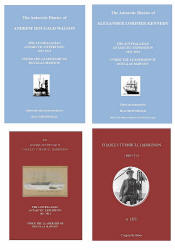
CERTIFICATE OF COPY
NUMBER.
All encased in a rigid slip cover.
Harrisson, Kennedy and Watson were all members of
Mawson's Western party led by the legendary Frank Wild,
the only person to be awarded the Polar medal with four
bars.
Charles Harrisson was the biologist on Mawson’s
expedition who was also an enormously talented painter.
He charted the life of the Western Party through his
paintings and drawings. In 1914 he tragically lost his
life when the ship he was on was returning from
Macquarie Island and was lost with all hands.
The fourth book is a short biography of Harrisson.
This is a limited numbered edition of 300 copies. The
books will not be available separately. Price: £60.00.
Order
|
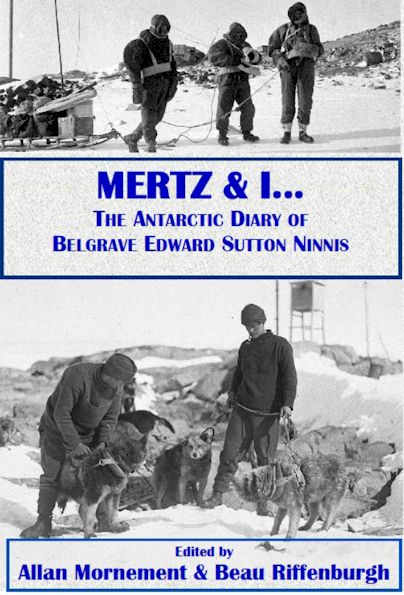
Mertz & I …
The Antarctic Diary of Belgrave Edward Sutton Ninnis
Edited by Allan Mornement & Beau Riffenburgh
On the afternoon of 10 November 1912, the Far Eastern Party, consisting of three men and seventeen dogs set off on a sledging trip. The men were Douglas Mawson, Xavier Mertz and Belgrave Ninnis. Two of these men tragically died, and only the leader, Douglas Mawson, returned after what has been described as ‘the greatest survival story in the history of exploration’. Belgrave Edward Sutton Ninnis was born on 22 June 1887. His father had sailed as ship’s surgeon on Discovery on the 1875–76 British Arctic Expedition led by Captain George Nares. It is evident from his diary that the young Ninnis was determined to follow in his father’s steps as a polar explorer though he had enlisted in the Royal Fusiliers. Whilst serving in Africa and Mauritius he made continuous efforts to obtain a position on Scott’s Terra Nova Expedition, but without luck.
Finally he felt he had to return to England on leave to seek interviews with Scott. Inside the diary is the story of a young man and his determined and ultimately successful attempt to become a polar explorer. It is a continuous record, from March 1908 to the final entry on 9 November 1912, though this book concentrates on his Antarctic endeavours. It is also the story of a fairly self-opinionated and arrogant young man who came to be liked and admired by his comrades. From the period of his acceptance on the expedition he focused on the enormity of the challenge ahead, and the diary provides a detailed record of the preparations, the voyage and the expedition itself.
Ninnis forged a strong bond with Xavier Mertz, who was 28, a graduate of Leipzig and Basel universities. He was also a champion skier, which was one of the reasons why Mawson had selected him. The story of Mawson’s epic fight to survive is well known – the story of the other two men is not.
Hardback, jacketed, 456pp +8pp colour & 16pp b&w plates. Over 110 drawings, illustrations and maps. £35.00 REDUCED
TO £25.00
Order
|
|
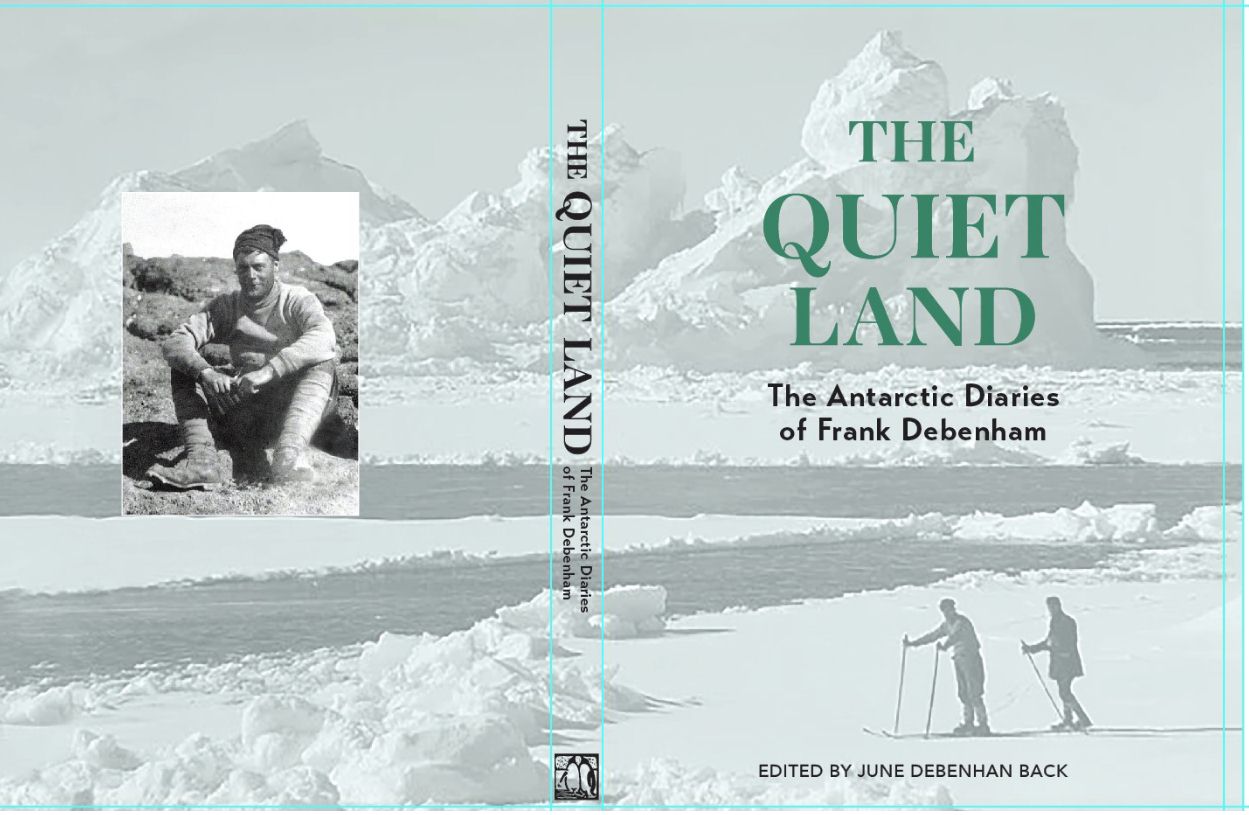
THE QUIET LAND
Frank Debenham
The Quiet Land is Frank Debenham’s Antarctic diary of
his time as a geologist on
Scott’s 1910 expedition. He saw the potential of the
Antarctic continent for the future
and conceived the idea of a polar institute. On his
return he set about fulfilling this
idea.
The book also describes the development of the Scott
Polar Research Institute
during his 26 years as its president.
There is a new 16pp glossy section and a new cover. The
text has not been
changed.
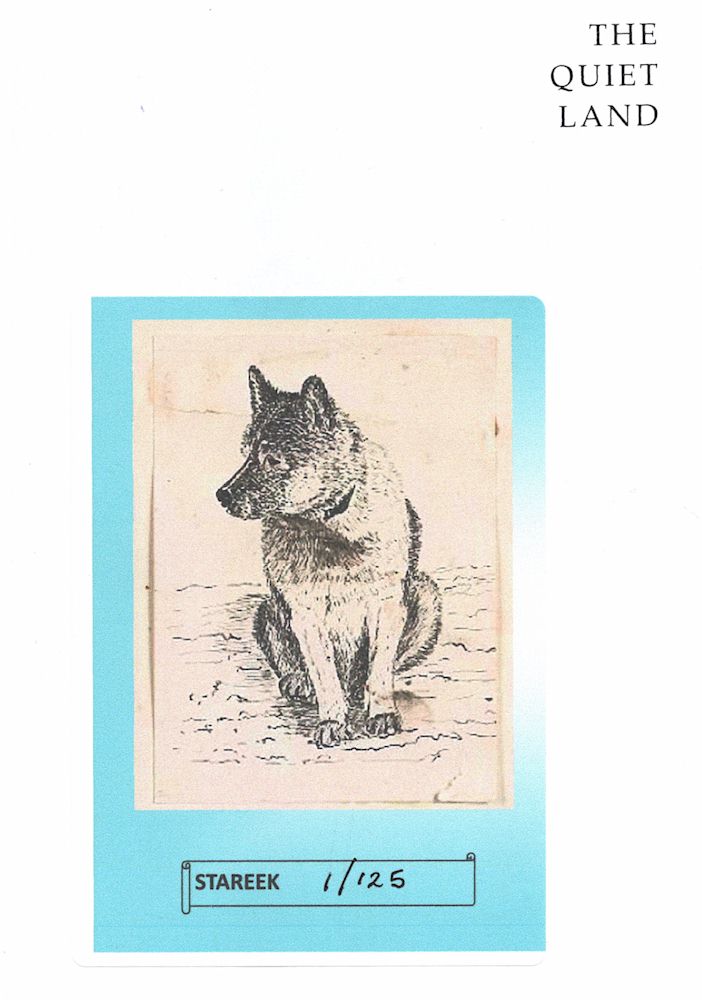
We first published this book over 30 years ago, but as a
result of quite a few
requests we have reprinted it in a small edition of 125
copies. Each copy has a book
plate with the copy number on it.
Hardback, jacketed, blocked on spine. 208pp + 16pp
plates, hardback, jacketed,
blocked on spine. .Over 60 photographs and
illustrations, many of which are by
Edward Wilson. Price £42.50.
Order.
8
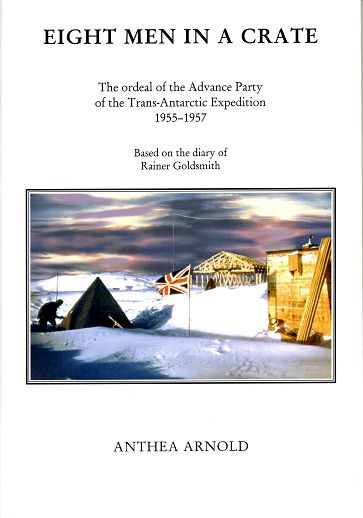
men in a crate -
The Ordeal of the Advance Party of the Trans-Antarctic Expedition, 1955–1957
Anthea Arnold. Based on the diaries of Rainer Goldsmith
|
|
<
< click the pics
to zoom > > |
|
Once the pole had been ‘conquered’ by Amundsen and Scott the next great journey was the crossing of the Antarctic continent, first attempted by Filchner in 1912 and then by Shackleton in 1914. As part of the International Geographical Year the Trans-Antarctic Expedition was set up with Vivian Fuchs in charge. He would start from a base on the Weddell Sea and after reaching the Pole, continue to the Ross Sea using supply depots laid by a New Zealand team working from McMurdo and led by the conqueror of Mount
Everest, Sir Edmund Hillary. In January 1956 an advance party of eight men was left at Shackleton base to build accommodation, explore and lay depots to ease the passage of Fuchs’s team the following year.
The achievement of this expedition still resonates today but the near-death experience of the Advance Party at Shackleton Base has been largely forgotten. The eight men left behind only just survived in a dreadful Antarctic winter, living by day in a
sno-cat crate and sleeping in tents at night while trying to erect a poorly designed hut with inadequate
manpower and equipment. The loss of much of their stores put their survival on a knife-edge.
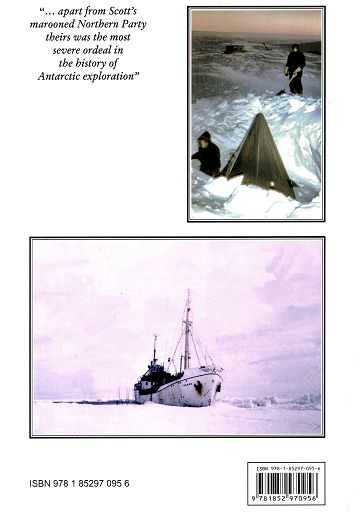
This account, based on the diary of the young medical officer, shows how close to disaster they came and how lucky they were to survive. Fuchs later admitted
that apart from Scott’s marooned Northern Party theirs was the most severe ordeal
in the history of Antarctic exploration.
144pp 16pp colour pictures, 50 photographs, paperback £12.75
REDUCED
TO £10.00 Order
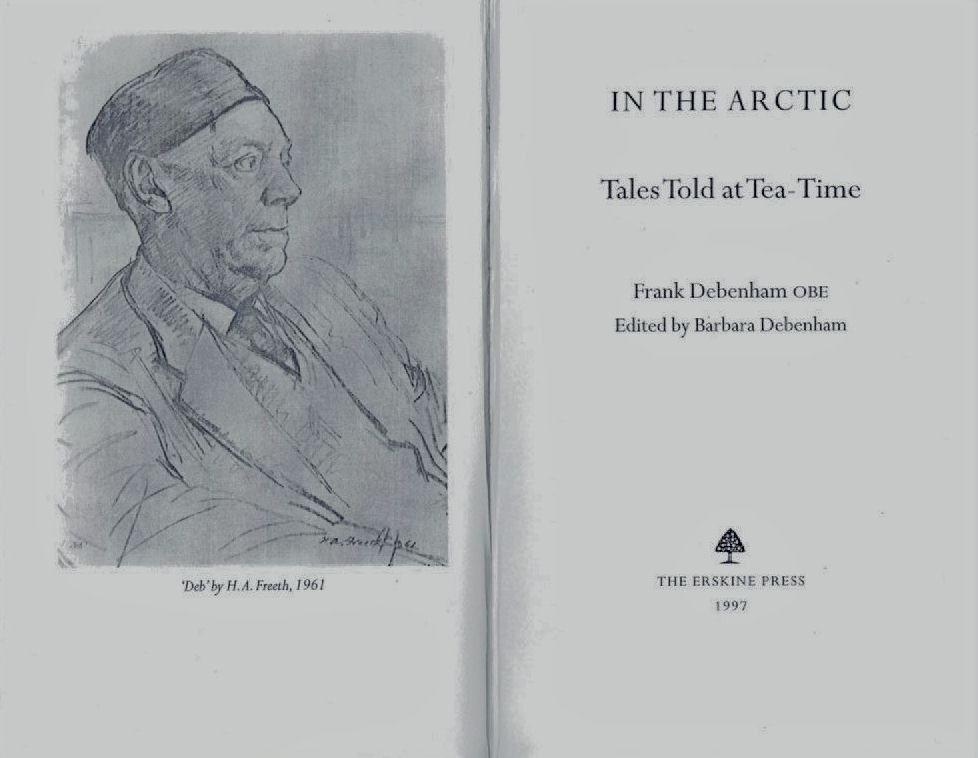
IN THE ARCTIC
Tales Told at Tea Time
Frank Debenham
Edited by Barbara Debenham
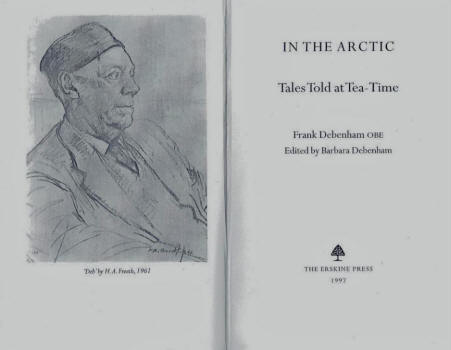
Frank Debenham was a member of the scientific staff on Scott’s 1910 expedition. He conceived the idea for a Polar Institute whilst sitting in Shackleton’s hut at Cape Royds and after the death of the polar party he campaigned for a living memorial to Scott. On 26th November 1920 the Scott Polar Research Institute came into being and Frank Debenham was its first director.
When he returned from the Antarctic in 1913 he resolved not to publish any reminiscences but at the urging of many friends he published, in 1952, IN THE ANTARCTIC which deals chiefly with the three years he spent there. The book has extensive illustrations which the author hopes ‘...may convey something of the spirit of harmony which reigned in that crammed but cosy hut forty years ago’.
IN THE ARCTIC, which was first published in 1997, was written in Deb’s retirement as his way of remembering some of the people—explorers, staff, research students—who passed through his tenure as a Director of SPRI. These delightful stories are a mixture of facts and fantasy, some poignant, some amusing but all delightful.
IN THE ARCTIC - 144pp, hardback, blocked on front and spine; over 30 photographs and illustrations £15.00 REDUCED
TO £10.00
Order
|
|
|